Tree Removal in Decatur, AL, Priced in Three Lines

The takedown, the stump and the debris quoted as separate numbers, with haul-away stated in words before a saw starts.

Decatur Tree Removal Pros has spent 20+ years taking down, trimming and grinding trees in Decatur, AL and across the Tennessee Valley. Hazardous removals, storm and emergency work, stump grinding, trimming and pruning, land clearing and forestry mulching, planting and transplanting, shrub and hedge removal, plant health care and written tree risk assessments are all in-house, on the same crews, priced from the same estimate form.

Every estimate splits the work into the takedown, the stump and the debris, because those are the three numbers competing quotes disagree about. Haul-away is stated in words rather than implied, access is measured before the tree is priced, and any disposal rule, utility question or federal approval the job depends on is written on the page instead of discovered halfway through it.

The ground changes fast in this valley, and the work changes with it. The Wheeler Lake bottomland at the river, the Highland Rim uplands behind it, and the plateau ground south toward Brindley Mountain hold the same species on three different soils, and the same oak fails three different ways across them. We work all three, and we quote the difference rather than average it.

Get Your Free Quote

Fast response • No obligation

So we can reach you about your request.

So we can send you a confirmation after you submit this inquiry form.

  • 20+ Years in the Tennessee Valley
  • Free Written Estimates
  • Same-Day Storm Response

What we do

Our Services

Tree Removal and Tree Care in Decatur, Alabama

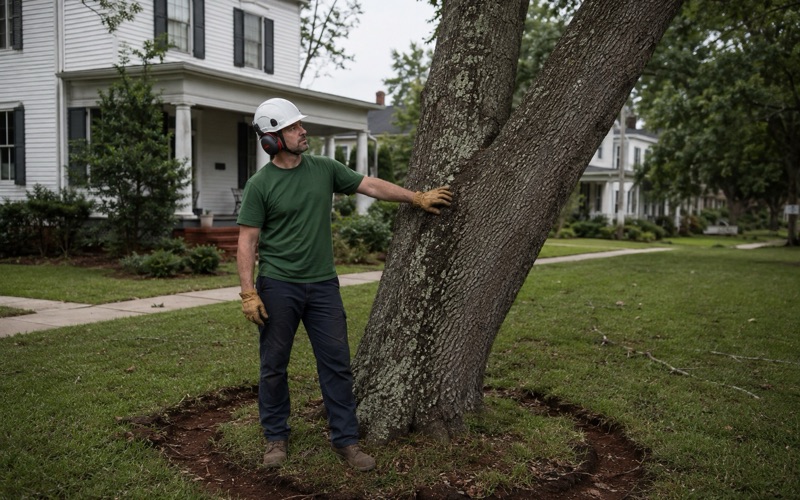
Worker reading a lean and root plate movement on a mature southern red oak in an older Decatur yard.

Arborist

Written tree risk assessments, decay testing and diagnosis from an arborist who works Decatur and the Tennessee Valley — sold separately from any removal.

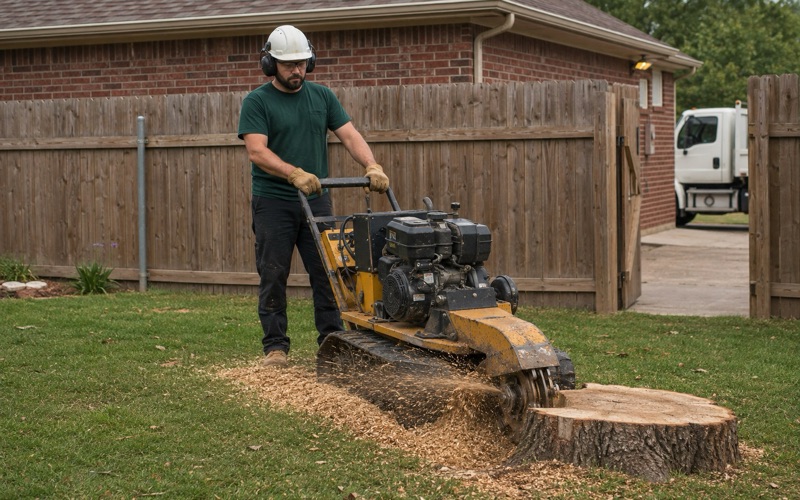
Worker sweeping a stump grinder wheel across the face of a white oak stump in a Decatur back yard.

Stump Grinding

Stump grinding across Decatur and the Tennessee Valley, quoted as its own line with the depth, the grindings and the crater all settled before we start.

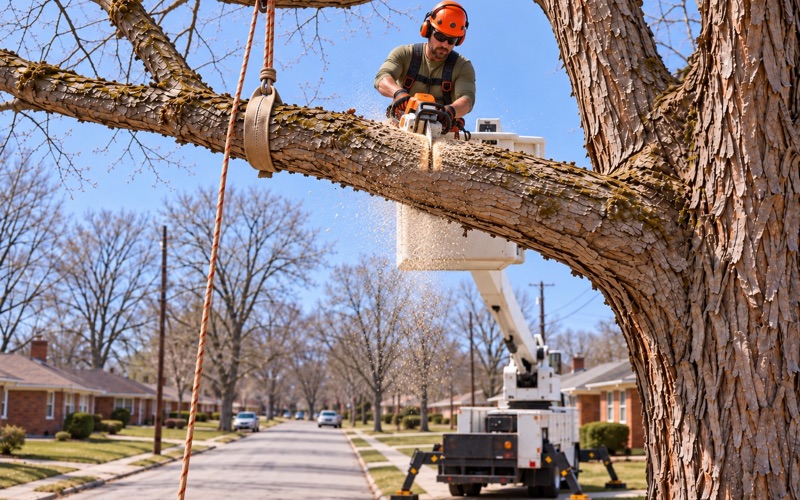
Worker in an aerial bucket making a pruning cut at the branch collar of a Decatur shagbark hickory.

Tree Trimming

Crown cleaning, raising, reduction and thinning across Decatur and the Tennessee Valley, plus cabling and bracing for trees worth keeping standing.

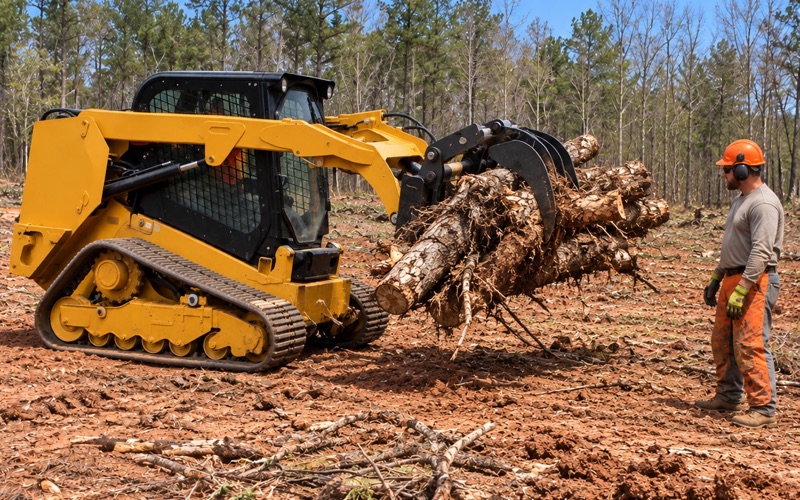
Worker guiding a cut sweetgum stem into the grapple of a track loader at a Decatur clearing windrow.

Land Clearing

Lot clearing, fence lines, pasture reclamation and view work across Decatur and the Tennessee Valley, with mulching and grubbing priced as separate answers.

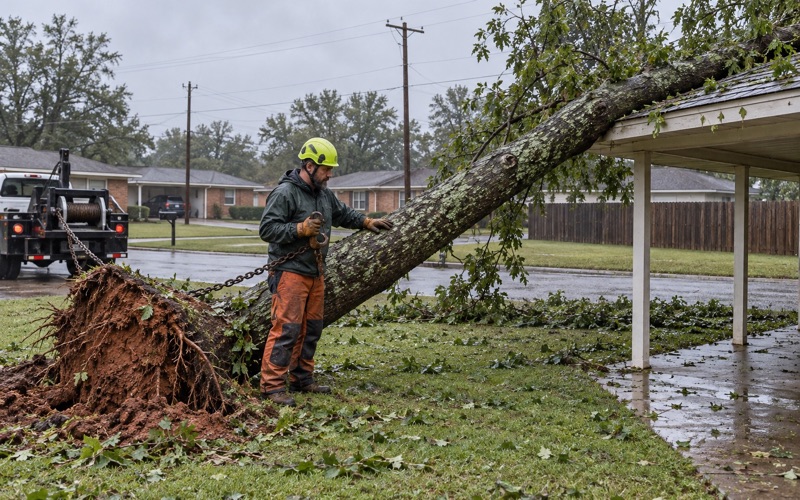
Worker setting a chain sling on a windthrown hackberry stem resting on a Decatur carport.

Emergency Tree Removal

Same-day emergency and storm tree removal across Decatur and the Tennessee Valley, with the utility call, the safety limits and the debris route all stated.

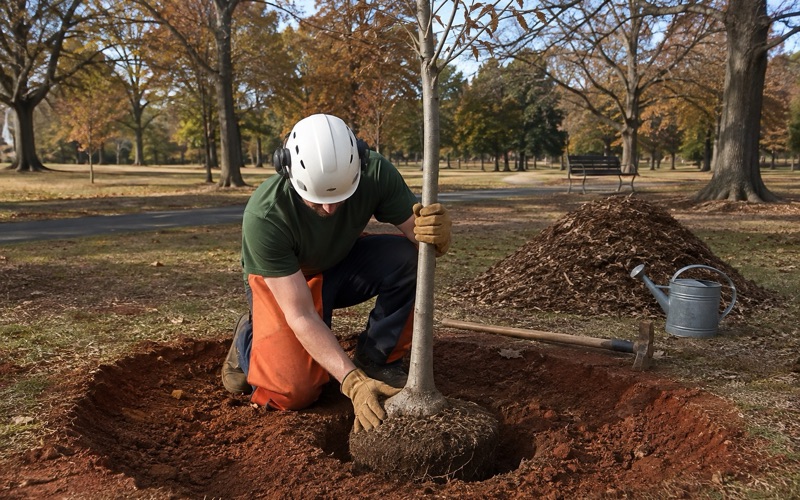
Worker setting a willow oak sapling upright in an open planting pit on Decatur park grounds.

Tree Planting

Tree planting and transplanting around Decatur, with species, spacing and planting depth chosen for the ground and the clearances the site actually has.

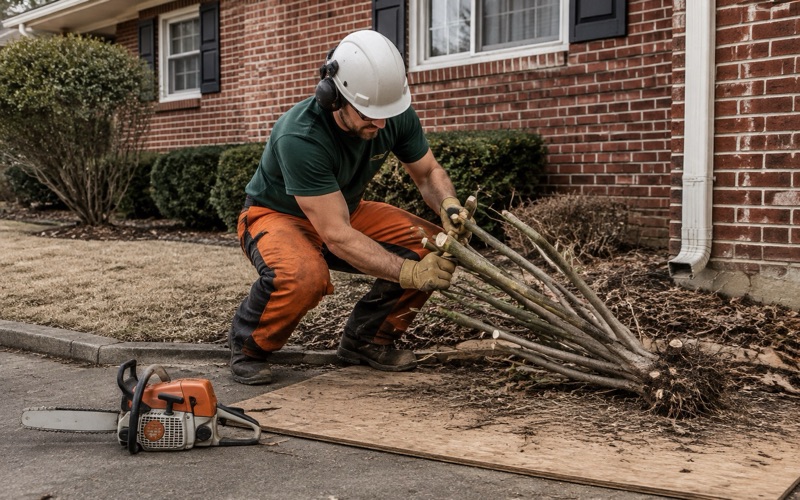
Worker pulling an overgrown crape myrtle stem cluster out of a Decatur foundation bed after cutting the tops off.

Shrub Removal

Overgrown shrubs, dead hedges, fence lines and brush cleared around Decatur, with root removal and debris disposal priced as separate lines on the estimate.

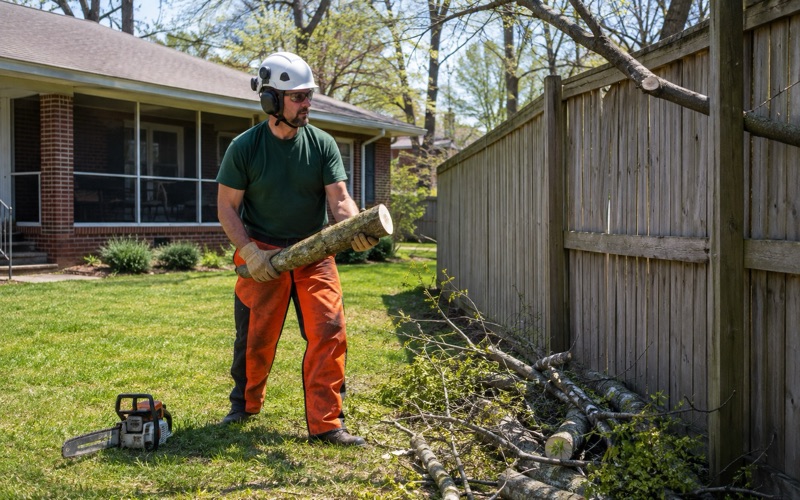
Worker holding a cut limb butt at the boundary between two Decatur back yards where a black cherry crosses the line.

Tree Removal Permit

What Decatur's ordinance actually reaches, who owns the tree at the curb, and what Alabama law allows with a neighbor's limbs — answered before work starts.

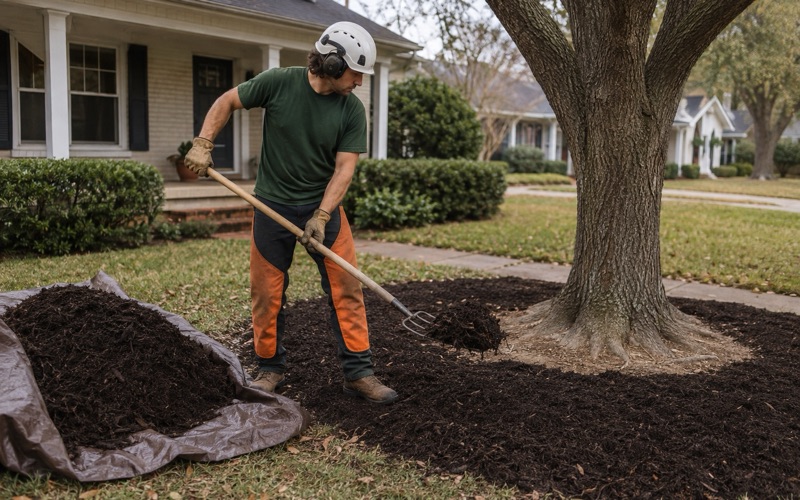
Worker spreading mulch to the drip line of a declining Decatur white oak with the trunk collar left bare.

Tree Disease Treatment

Diagnosis first: pests, canker, root damage and decline read on site around Decatur, with the stressor named before any treatment is quoted.

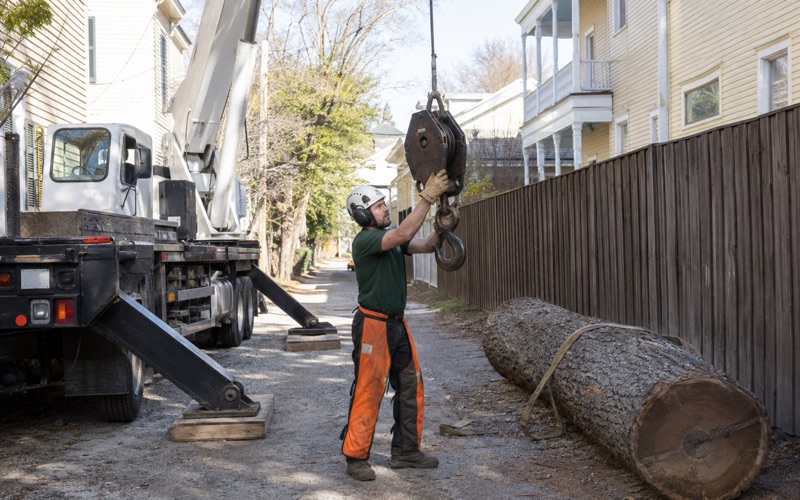
Worker setting the choker onto the crane hook block in a narrow Old Decatur alley before a pick.

Crane Tree Removal

Crane and tracked-lift removals around Decatur for trees standing over roofs, pools and fenced back yards, with setup, reach and access measured before pricing.

Twenty Years of Tree Work in the Tennessee Valley

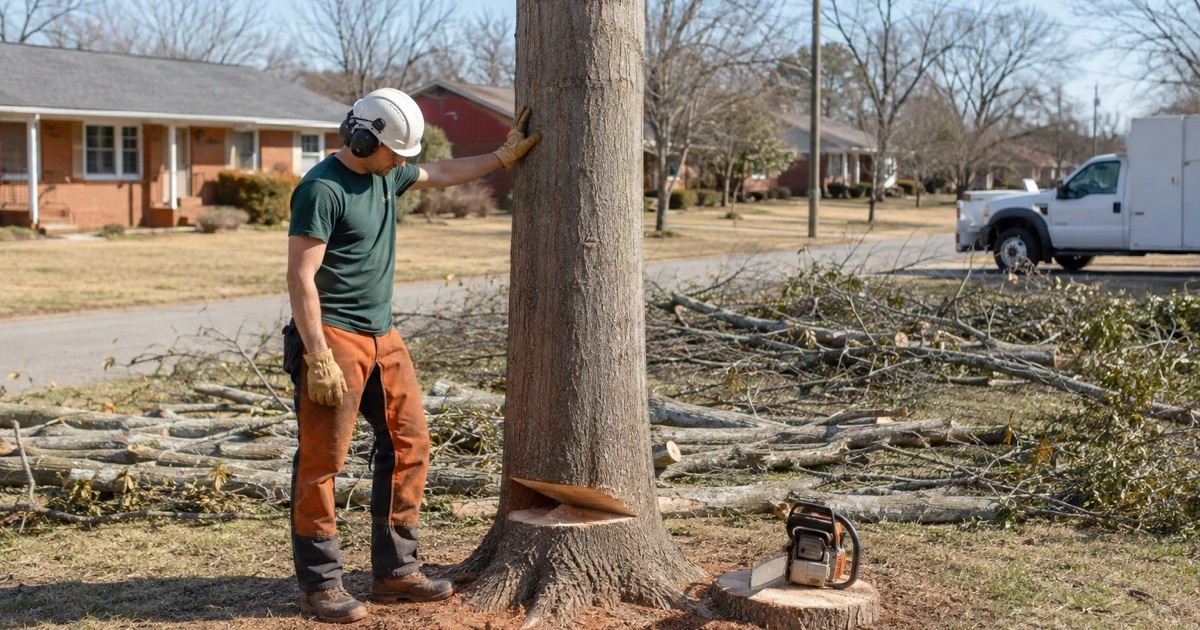
Worker checking the hinge on a Decatur white oak spar before the felling cut, on a flat valley-floor street of older brick houses.

20+ Years Across Three Kinds of Ground

Twenty years and more of removals, pruning and stump work in this valley means three genuinely different job sites rather than one repeated a thousand times. A crew that has taken trees off bottomland at the lake, off deep residual clay on the Rim, and off plateau ground to the south prices the difference in advance, instead of finding it with a grinder or a chipper already on the trailer.

Why Choose Decatur Tree Removal Pros

Three Priced Lines

Every estimate splits the takedown, the stump and the debris into three separate numbers, so a low bid that quietly leaves a stump and a brush pile in the yard is visible on the page rather than on collection day. A single lump sum hides exactly the items two quotes disagree about, which is how it stays a lump sum.

Haul-Away in Writing

No quote leaves here with haul-away implied. It is written on the estimate in words, included or not included, because the City of Decatur requires contractors to haul debris from their work sites and the Solid Waste Department will not collect it — so an unstated haul-away becomes the homeowner’s problem rather than the contractor’s.

Access Measured First

Gate width, drop zone, carry distance to the truck, and where a chipper that will never fit through any gate is actually going to sit all get measured before the tree is priced. Quoting on the machine in the brochure instead of the one that fits is how a job stalls at the fence line with a crew standing in the driveway.

Straight Service-Drop Answers

This ring answers the wire between the pole and the house three different ways: one utility sends someone out to look at it, one will drop the line so a crew can work, and one treats the wire as entirely the homeowner’s. Never assume yours behaves like the next city’s — we confirm which one you are in before the day of the job.

Honest Firewood Credit

A firewood credit is a line item, never a favor. It is worth least on a Decatur job, where the Morgan County Regional Landfill takes limbs and stumps at a published gate rate, and most on a job in a city that refuses contractor brush outright, so the credit is quoted against where the wood actually has to go rather than sold as generosity.

Emergency and Storm Tree Work

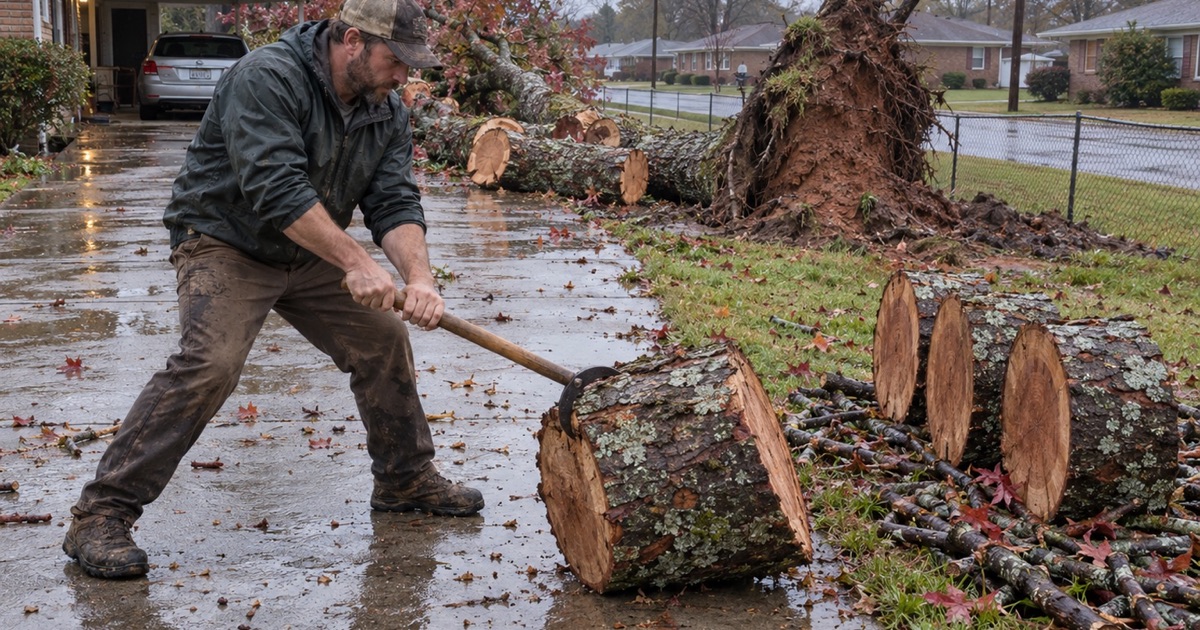
Worker rolling a red maple round clear of a Decatur driveway with a cant hook the morning after a storm.

Storm Removal With a Tree on the House

A trunk through a roof is a rigging problem before it is a removal, because the load has to come off the structure in controlled pieces rather than be dragged off it. In the first hour we confirm nobody is under the tree, look for a service drop buried in the debris, and set a drop zone that does not run the wood back across the roofline.

The Service Drop Between Pole and Weatherhead

The wire running from the pole to the weatherhead on the house is not the power company’s problem in every city in this valley, and knowing which one you are in decides who you call first. In Decatur that call is Decatur Utilities at 256-552-1400, option 1; elsewhere in the ring the same wire may be treated as the homeowner’s to hire out.

A Tree Across a Distribution Line

A tree lying on a primary distribution line is a utility call and nothing else. Decatur Utilities publishes one instruction for it — stay away from all downed power lines — and no crew, ours included, approaches until the conductor is confirmed de-energized. The number is 256-552-1400, option 1, before anyone walks into the yard to look.

Energized Conductors, Wind and Ice

Every crew works to the electrical-hazard and weather limits in ANSI Z133, the safety standard for arboricultural operations, which is why a climber does not go up while the wind is still up or while ice is still coming off the crown. The honest version is that some storm calls get made safe at ground level and finished the following morning.

Reading a Leaning Tree After a Storm

A lean by itself is not a verdict. The Alabama Cooperative Extension System’s post-storm assessment reads a lean with soil cracks and a mounded root plate as an immediate removal, and reads the same lean without them as something to monitor, so the ground around the trunk gets inspected before the tree does.

Broken Limbs Measured Against Stem Diameter

A broken limb is judged against the diameter of the stem it came off, not against how bad it looks from the driveway. The state extension matrix monitors a break under 30 percent of stem diameter, calls 30 to 50 percent a prune-or-remove decision, and removes above that — which is why the break gets measured rather than eyeballed.

Bark Stripped From a Trunk

Bark torn off a trunk by a strike or by a falling neighbor is measured as a share of the circumference. Half the trunk stripped is a removal on the same post-storm matrix; a narrow wound on an otherwise sound stem usually is not, and the difference between those two answers is a tape measure rather than an opinion.

A Cracked Main Trunk

A crack running through the main trunk is the one storm finding with no second opinion, and the post-storm matrix calls for immediate removal. The stem has already failed and is only standing, so we will say so on the first visit even when the tree still carries a full green crown and looks untouched from the street.

What the City Hauls After a Storm

Hiring anyone at all changes the answer. Decatur collects storm limbs from homeowners when they are cut to less than 12 feet in length and less than 12 inches in diameter, with bulk pickup unscheduled and roughly two weeks out — but the Solid Waste Department will not haul debris from a work site, whoever cut it.

Storm Work That Is Not an Emergency

Most of what a storm does is tell you about a tree that did not come down. A crown that shed one large limb, a root plate that lifted and settled back, or a co-dominant union that opened under load are all standing problems, and they get quoted as ordinary scheduled work rather than at an emergency call-out price.

Tree Removal, Permits and Property Lines

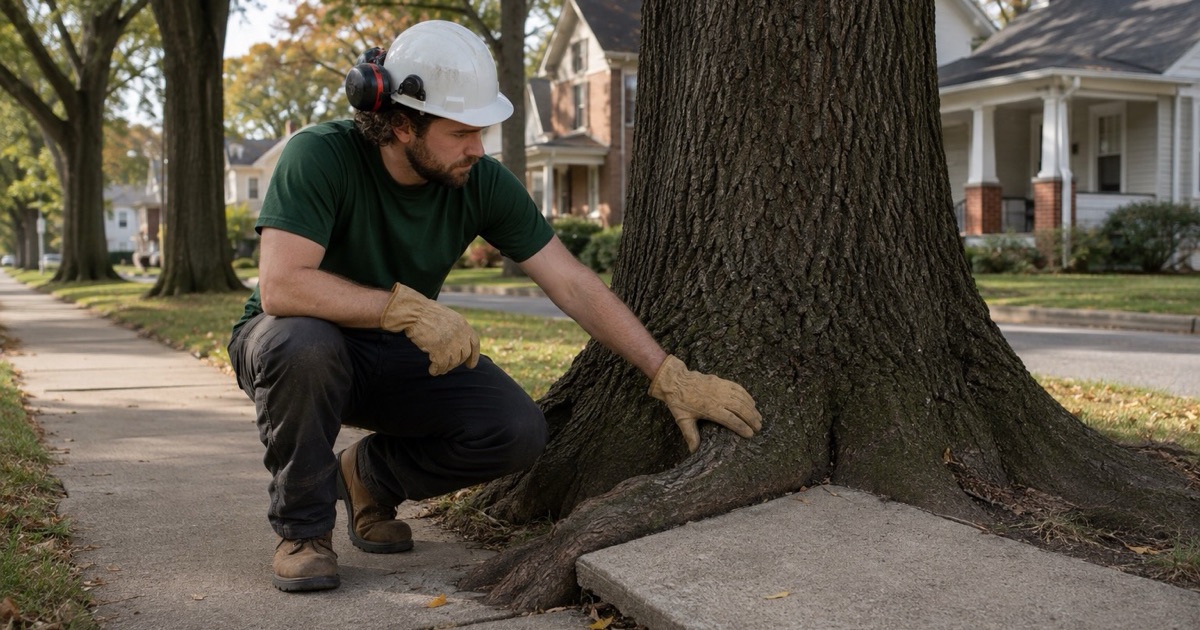
Worker examining the root flare of a willow oak on the verge strip between a Decatur sidewalk and curb.

Tree Removal Permits on a Decatur Lot

Decatur imposes no tree removal permit on a finished residential lot. The zoning ordinance was rewritten as Chapter 25, and its Development Standards article names landscaping and buffers, fences and walls, lighting, floodplain management and stormwater in separate sections while containing no tree preservation article and no tree permit section anywhere in it.

The Right-of-Way Tree at the Curb

The tree in the strip between the sidewalk and the curb is a different tree with a different owner, governed by the city’s own right-of-way cut list rather than by the homeowner’s preference. We establish which side of that line a trunk sits on before quoting, because the wrong answer there is a municipal problem rather than a billing one.

Overhanging Limbs and Alabama Self-Help

Alabama follows the self-help rule: an owner may cut back branches and roots that cross the boundary, at the boundary, at their own expense. It does not license entering the neighbor’s yard, felling their tree, or cutting so far back that the tree dies — which is where the quiet disputes between otherwise reasonable neighbors start.

Boundary Trees Standing on the Line

A trunk straddling the property line is treated differently from one that merely overhangs it. Alabama treats a line tree as jointly held, so neither owner removes it alone, and the practical answer is a written agreement between the two neighbors before a saw comes out rather than a conversation afterward.

A Dead Tree the Neighbor Was Told About

Written notice is what changes the conversation. A dead tree the neighbor has been told about in writing sits in a different position from one nobody ever mentioned, and Alabama’s statutory damages for cutting another person’s trees run just as hard in the other direction. We document the tree and leave the argument to the parties.

Written Arborist Reports, Sold Separately

A written tree risk assessment is a product you can buy on its own, scoped and priced apart from anyone’s estimate to remove the tree. The credentials that sit behind that work in this industry are the ISA Tree Risk Assessment Qualification and the ASCA Registered Consulting Arborist designation, and a report written to be read by an adjuster is built differently from a sales visit.

Trees Near the Pryor Field Approach

Alabama’s airport height zoning statute defines an airport hazard as any structure or tree that obstructs the airspace required for aircraft landing or taking off, so a tree can be regulated as though somebody built it. Near Pryor Field Regional Airport that turns a tall pine into a height question and, on some sites, an FAA Form 7460-1 notice.

Cutting on a Wheeler Lake Bank

Work on the reservoir bank is federal ground before it is a tree job. The Tennessee Valley Authority administers a Section 26a approval and a shoreline management zone along the Wheeler Lake shoreline, and that approval belongs in the schedule at the estimate rather than being discovered when a crew is already standing on the bank with a saw.

Who Pays When a Tree Comes Down

The tree that fell on the house, the tree that fell on the car, and the tree still standing over both are three different claims with three different answers, and none of them turn on who owned the tree in the way most people assume. We put the tree facts in writing and leave the coverage question to the adjuster.

Debris Removal Under a Homeowner Policy

Getting the wood off the ground is usually its own allowance in a homeowner policy, capped apart from the repair itself, and the Alabama Department of Insurance publishes consumer guidance on how those provisions read. The cap is generally written against the loss rather than per tree, so several trees down in one night tend to share a single number.

Trimming, Pruning and Tree Health

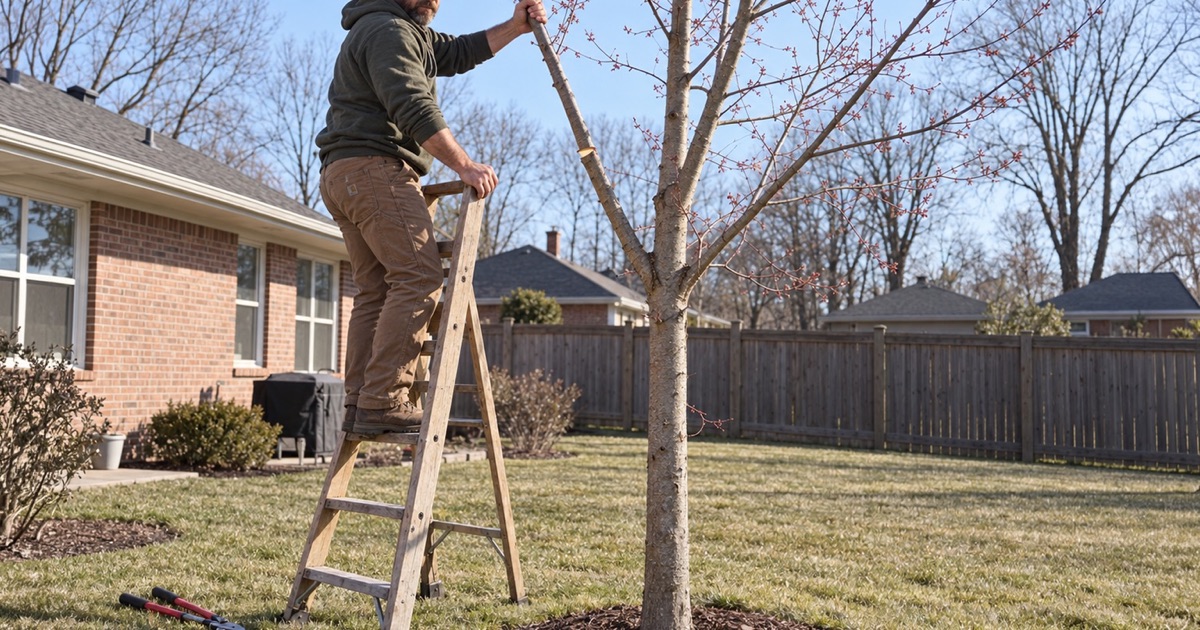
Worker on a ladder making a structural pruning cut on a young red maple in a Decatur back yard.

Crown Cleaning, Raising, Reduction and Thinning

Four different jobs share one word. ANSI A300, the tree care industry’s pruning standard, separates cleaning — deadwood and broken limbs out — from raising the lower canopy for clearance, reducing overall height and spread, and thinning for light and wind movement. Naming the one you actually want is what stops a quote from meaning four things.

Topping, Tipping and Round-Over Cuts

Topping is not aggressive pruning; it is a different operation with a different outcome. Heading cuts leave stubs that decay from the cut face and force epicormic sprouts that are weakly attached where they emerge, so a topped tree comes back taller, denser and more hazardous within a few seasons. We quote a proper reduction instead and explain why.

Cabling and Bracing Instead of Removal

Sometimes the honest answer is that the tree does not have to come down. Static and dynamic cabling systems limit how far a co-dominant union can move in wind, and threaded steel bracing rods hold a split that has already begun, so a large shade tree with included bark at the union has a real alternative to a stump.

Lightning Protection for Tall Yard Trees

A lightning protection system for a tree is a copper conductor path to ground, installed on the trees whose loss would actually matter — the tall specimen close to the house rather than every stem on the lot. Tulip poplar comes up in that conversation here more than any other species, because it outgrows everything standing around it.

Ash Trees and the Emerald Ash Borer

The Alabama Forestry Commission has confirmed emerald ash borer in Jackson and Madison counties in north Alabama, following earlier confirmations further south, and Morgan County is not on that record. Dead ash goes brittle fast, which turns a removal from a climbing job into a crane or tracked-lift job sooner than most homeowners expect it to.

Hardwood Firewood and Where It Can Move

Alabama’s emerald ash borer rule regulates firewood of all hardwood species rather than ash alone, and the counties it codifies are Calhoun, Cherokee and Cleburne. No county in this ring is on that codified list, which is a different statement from saying a load can go anywhere, so ask before hauling hardwood out of the valley.

Southern Pine Beetle and Hypoxylon Canker

The Alabama Forestry Commission calls southern pine beetle the number one killer of pines in Alabama, and under drought its pitch tubes can be very small or absent with only reddish-brown boring dust showing on the bark. S-shaped galleries mean southern pine beetle; Y- or H-shaped galleries mean Ips engraver beetles, and hypoxylon canker on a hardwood says the tree was already stressed.

Roots Cut for a Driveway or Trench

Roots severed for a driveway, a utility trench or a pool are measured against trunk diameter and the critical root zone the way the tree care standard measures them, not by how the cut face looks. That measurement is what says whether the tree is a monitoring case, a candidate for a tree protection zone and construction fencing, or already lost.

Root Collar Excavation and Air-Tool Root Work

An air-excavation device blows soil off the root flare without cutting anything, which is how girdling roots and a buried root collar get found and corrected before they finish the tree. Radial trenching and soil decompaction on the same visit are ordinary plant health care almost nobody in North Alabama offers, and all of it costs less than the tree.

Leyland Cypress Screens Planted Too Tight

A privacy screen planted so the crowns touch traps moisture inside the row, and Seiridium canker follows — brown flagging in one plant, then the next, then a gap that never fills in. The Alabama Cooperative Extension System publishes spacing guidance worth reading first; once canker is in the row, the answer is removal and replanting.
Stumps, Debris and Land Clearing

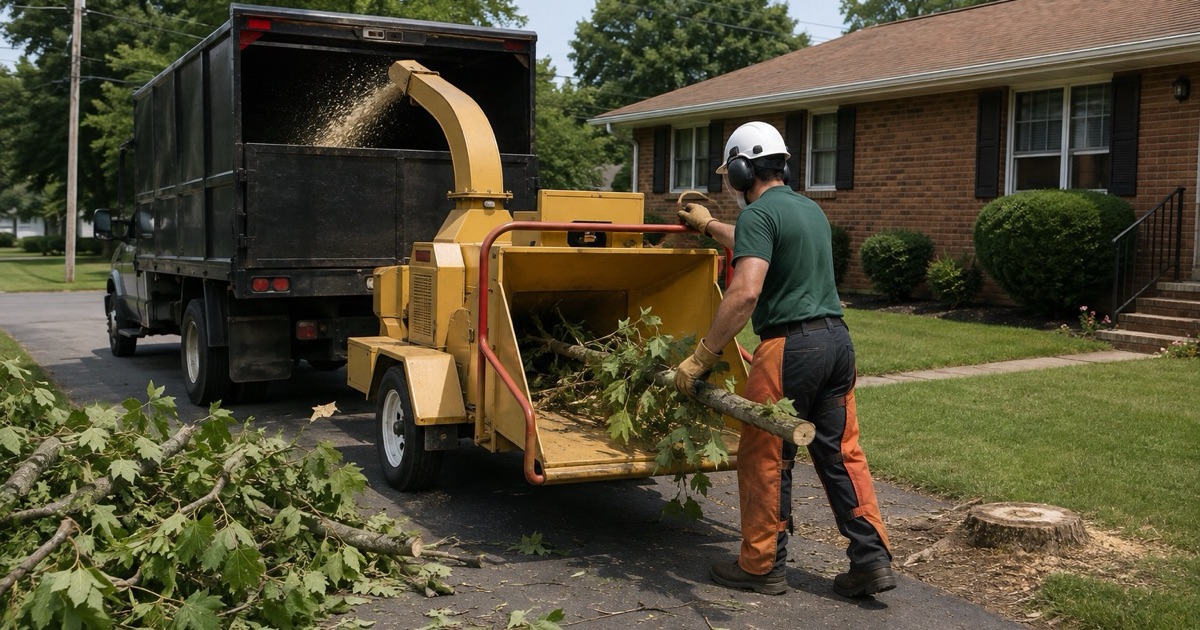
Worker feeding tulip poplar limbs into a chipper from the side of the infeed on a Decatur driveway.

Stump Grinding Against Digging It Out

Grinding cuts the stump and its buttress roots into chips and leaves the deep roots to decay in place; excavation pulls the root plate out whole and leaves a hole the size of that plate. Grinding is faster, cheaper and needs far less machine access, which is why it is the default answer on a finished yard.

How Deep a Stump Grinder Actually Cuts

A grinder’s cutting wheel and carbide teeth reach roughly 12 to 25 inches below grade depending on machine class, and that is the real limit on most lots here. The Decatur and Dewey soils that dominate this valley run more than 60 inches to limestone bedrock, so the machine stops long before rock does.

Chert Content and Carbide Tooth Wear

On Rim ground the constraint is abrasion rather than refusal. Chert-loaded profiles running from about 20 percent up toward 60 percent chert do not stop a grinder, they consume its teeth, so a job on that ground is quoted with tooth wear inside the number instead of arriving as a surprise line on the final invoice.

The Crater of Grindings

Grinding leaves a mound of chips and a hole underneath it, and whether that gets raked back, topped with soil and seeded is a line on the estimate rather than an assumption either side gets to make. Chips are not topsoil; a crater backfilled with grindings alone gives you a slump and a dead patch a season later.

Trunk Rounds Nobody Quotes For

The wood nobody mentions is the trunk itself, cut into rounds too heavy to lift and stacked where the tree stood. Every quote here says where those rounds go — off the property, bucked and left, or split for the homeowner — because a takedown price that ignores the heaviest thing on the site is not really a price.

The Firewood Credit as a Line Item

Where the wood carries resale value the credit appears on the estimate as its own number, up front. It is worth least in Decatur, where the Morgan County Regional Landfill accepts limbs and stumps at a published gate rate, and most in a city that refuses contractor brush outright and leaves a crew hauling further to get rid of it.

Wood Chips and the Pile They Make

A brush chipper turns a canopy into more mulch than most yards can absorb, so the pile is decided before the feed roller starts turning. Chips left on site work as mulch away from trunks and away from beds that need drainage; chips hauled off are a truckload with a tipping fee attached, and the estimate says which one you bought.

Curbside Brush Limits City by City

Decatur collects homeowner limbs under 12 feet long and under 12 inches thick, with bulk pickup unscheduled and roughly two weeks out. Cullman meters it harder — 3 cubic yards per stop, limbs under 6 feet, stumps and tree parts under 75 pounds, placed within 5 feet of the curb — and both refuse debris from work someone was paid to do.

Where the Wood Goes, County by County

The Morgan County Regional Landfill at Trinity, operated by the City of Decatur, accepts limbs, stumps and construction and demolition debris at 30 dollars per ton with a 16 dollar minimum, weekdays and Saturday morning. Gates elsewhere in the ring price and restrict wood on their own terms, so disposal is quoted against the job’s county rather than the yard’s.

Land Clearing, Mulching and Root Grubbing

Lot clearing, fence lines, pasture reclamation and opening a view are equipment decisions before they are tree decisions. A forestry mulcher leaves the root mass in the ground under a layer of chip; root grubbing pulls the stumps out and leaves ground that then has to be graded and seeded, and those two prices are not close to each other.

Areas We Serve

Decatur Tree Removal Pros provides tree-removal throughout the greater Decatur area, with the same crews and the same standards on every job.

Good to know

Frequently Asked Questions

How do you price a tree removal?

The estimate carries three separate numbers: the takedown, the stump, and the debris. Those are the three items competing quotes disagree about, and splitting them is what lets you compare a cheap bid against an expensive one honestly instead of guessing what each one left out. Access is measured first — gate width, drop zone and carry distance to the truck — because the machine that fits is what sets the takedown price.

Do I need a permit to take down a tree in my own yard in Decatur?

No. Decatur's zoning ordinance was rewritten as Chapter 25 and contains no tree preservation article, no tree removal article and no tree permit section, while regulating fences, lighting, floodplain and stormwater in named sections of the same article. The Urban Forestry Ordinance's jurisdiction is street trees. Development sites working from a landscape plan are a separate question, and so are the locally zoned historic districts, where we ask the city before assuming either way.

Can I keep the wood for firewood?

Yes, and it is a decision made at the estimate rather than on the day. Trunk rounds can go off the property, be bucked and left stacked where you want them, or be split for you. Where the wood has resale value the firewood credit appears on the estimate as its own line, priced honestly — it is worth least on a Decatur job and most where a city refuses contractor brush and the wood has nowhere cheap to go.

Is haul-away included in the price?

It is written on every estimate in words, included or not included, never implied. That matters here more than most places: the City of Decatur requires contractors to haul debris from their own work sites, the Solid Waste Department will not collect it, and homeowners are told not to negotiate on the assumption that the city will. An unstated haul-away turns into the homeowner's problem after the crew has left.

How long does a typical removal take?

A straightforward yard tree with truck access is usually a single day, stump included. A large hardwood over a roof, a job that needs a crane or a tracked lift, or a back yard reached only through a gate can run two or three days because the wood leaves the site in smaller pieces. The estimate names the number of days and what decides it, rather than leaving the schedule open.

What should I do if the tree is touching a power line?

Call the utility before anyone walks the yard. In Decatur that is Decatur Utilities at 256-552-1400, option 1, and the published instruction is to stay away from all downed power lines. No crew of ours approaches a conductor that has not been confirmed de-energized. The wire between the pole and the house is a separate question, and this ring answers it three different ways depending on which city you are in.

Will you work during a storm or at night?

We answer storm and hazard calls the same day and will make a site safe at ground level after dark. What we will not do is put a climber into a tree while the wind is still up or while ice is coming off the crown, because the electrical-hazard and weather limits in the ANSI Z133 safety standard for arboricultural operations exist for exactly that hour. Many storm calls get secured at night and finished the next morning.

Can you reach a back yard behind a narrow gate?

Usually, and the answer is decided with a tape measure rather than a promise. Narrow-access tracked machines and a tracked spider lift go through openings a bucket truck cannot, and where nothing fits the tree comes down by sectional dismantling with rigging. What we do not do is quote on a machine that was never going to fit and then discover it at the fence line on the morning of the job.

How deep do you grind a stump, and what does it leave behind?

A cutting wheel reaches roughly 12 to 25 inches below grade depending on machine class, which on most lots here is the binding limit rather than rock. What it leaves is a mound of grindings over a hole. Whether that gets raked back, topped with soil and seeded is its own line on the estimate, because chips are not topsoil and a crater backfilled with grindings alone slumps within a season.

Do you charge for an estimate?

No. Estimates are free and written, and the written part is the point — the three priced lines, the haul-away sentence, the access notes and any disposal or approval the job depends on all appear on the page. A written arborist report is a different product with its own scope and its own price, and it is quoted separately from any estimate to remove the tree.

Ready to Get Started?

Request a free quote today and we'll get back to you fast.