Decatur Tree Removal Pros has been handling tree removal in Cullman for more than twenty years, and on most jobs here the estimate gets decided behind the house rather than out front. The street will take whatever equipment the work needs. The gate, the fence line and the distance from the trunk to a parked truck are what set the price and the method.
So we measure access before we price the tree. Gate width, the size of a usable drop zone, how far a crew has to carry wood to reach the truck, and where a chipper that will not fit through any gate is going to sit are the four numbers that decide whether a removal is a straightforward drop or a day of sectional dismantling over a fence.
The written estimate keeps the takedown, the stump and the debris on three separate lines, because those are the three figures competing quotes disagree about. Haul-away is spelled out in words as included or not included, so a low number and a high one can be compared for what they actually cover.
A hundred-foot grid, and what it buys at the curb
Cullman was laid out in 1873 in half-acre lots with streets and avenues one hundred feet wide, which is an unusual thing for a town to inherit. The oldest blocks in most cities are the hardest ones to work in: narrow pavement, no shoulder, nowhere to put a machine. Here the plat inverted that, and the older part of town has more working room at the curb than neighborhoods built a century later.
Setting up where there is room to set up
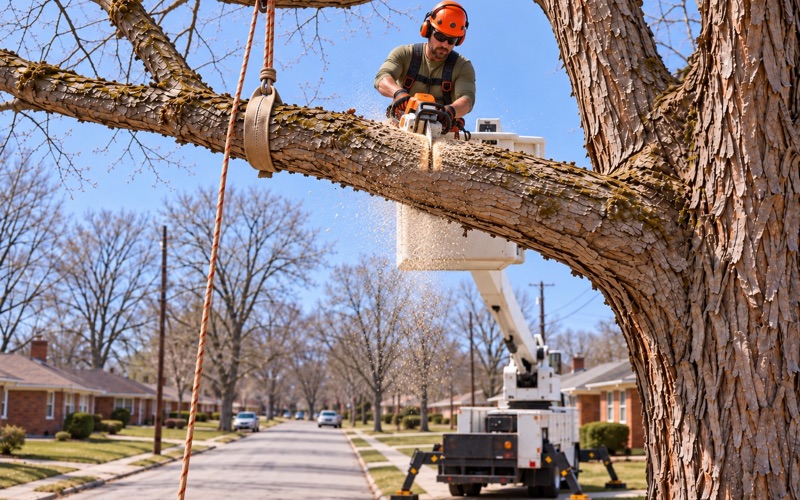
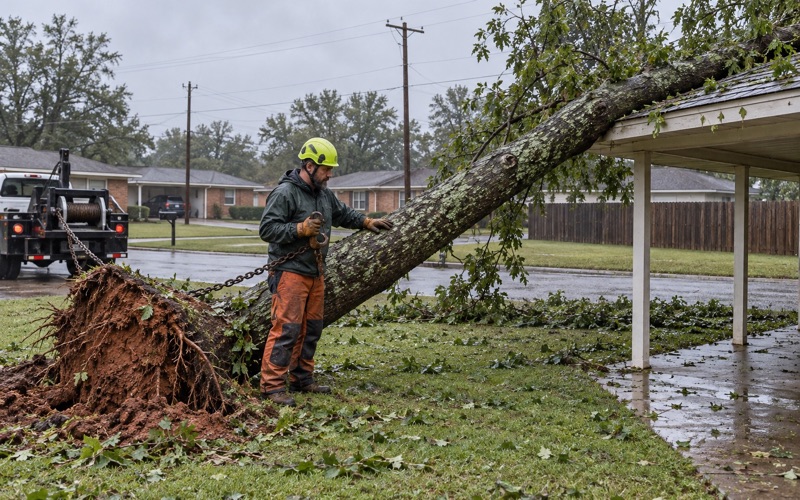
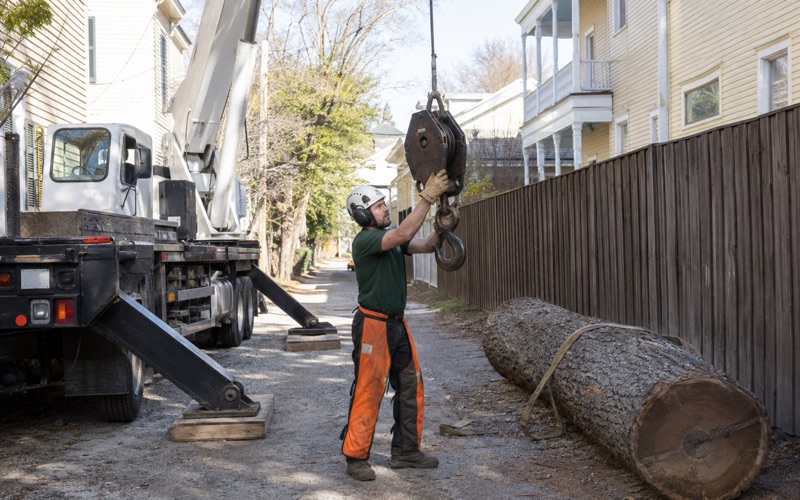
A hundred feet of street means a crane or a tracked lift can be positioned and outriggered with the road still usable, and a knuckleboom grapple truck can work a pile without closing a lane in both directions. That matters most on the removals people actually worry about, where a mature tree stands over a roof and the safe method is picking the wood off in sections rather than felling anything. When there is room to set a machine, the machine does the lifting instead of a climber and a rigging line.
If a takedown does put limbs into a public street or right-of-way, that is a City of Cullman matter and reachable at 256-775-7109. On a job we run, keeping the pavement clear is our crew’s work rather than the city’s.
Quoting the machine that will fit
Wide streets do not automatically make a crane the right call. We quote crane and tracked-lift work where a tree stands over a structure and there is a setup for it, and narrow-access equipment where the work is behind a fence, which in Cullman is most of it. Measuring first is what lets the quote name the machine we will actually bring.
Looking for tree-removal closer to Hartselle? See Tree-Removal in Hartselle.
The back yard is the real constraint once the street is not
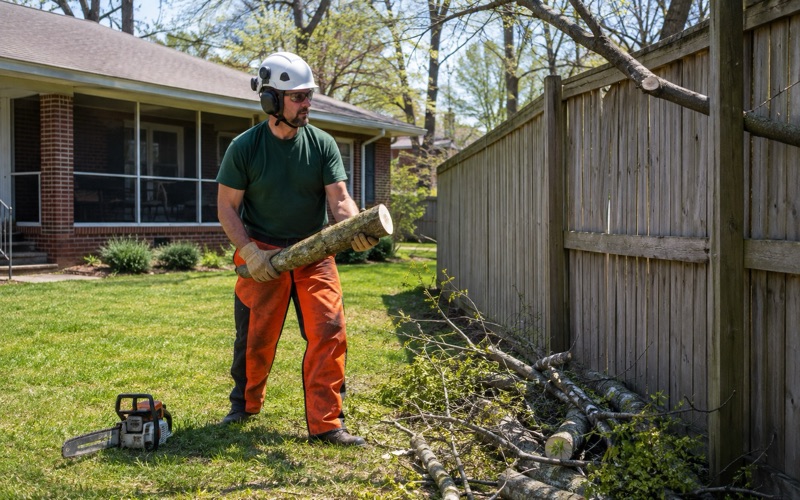
Half-acre lots put the depth behind the house, and that is where the trees that keep people up at night are standing. The binding measurement is rarely the street here. It is the gate, the corner a fence makes with a shed, and the carry from the stump to whatever is parked out front.
Gate width and carry distance
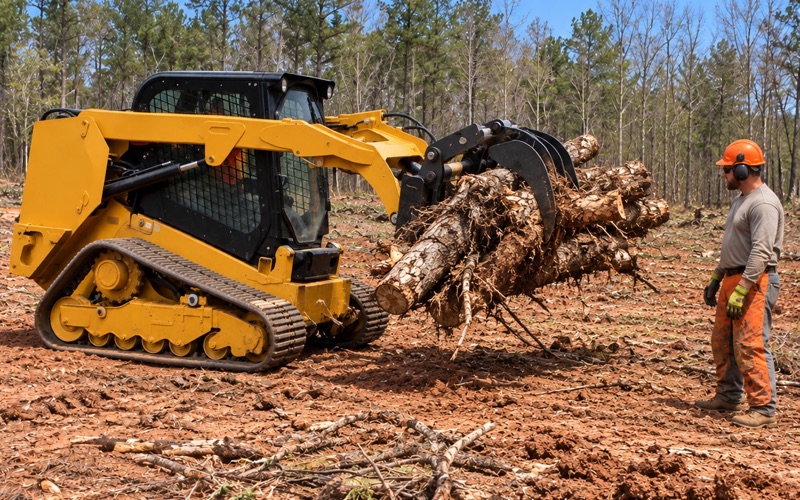
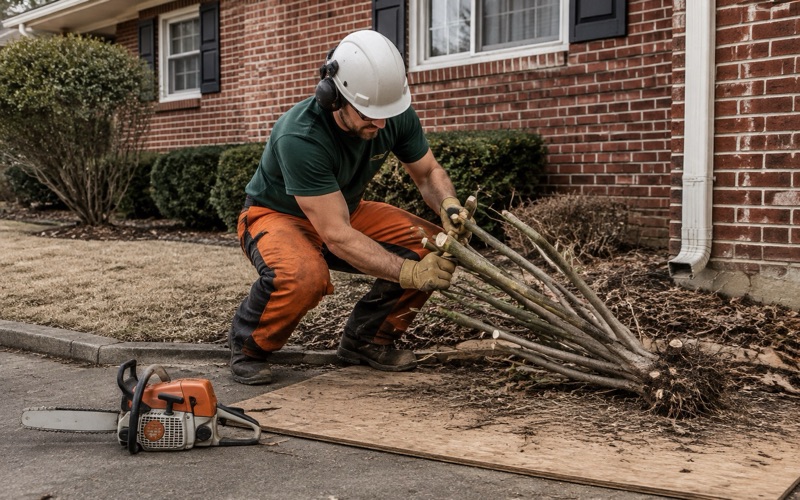
A brush chipper is not going through a four-foot gate, so it stays at the curb and the wood comes to it, which turns a short takedown into a long haul-out and shows up as labor on the estimate. Where a fence panel can come out and go back, we say so before the day. Where it cannot, the debris line reflects the carry and nobody is surprised by it on the invoice.
Rigging when nothing can be dropped
A back yard holding a fence, a deck and a neighbor’s roof inside the drop radius gets dismantled in pieces on a rigging line rather than felled. A bull rope, a rigging block set above the cut, a friction device at the base and a groundman controlling the descent are slower than a directional notch and back cut, and that is the whole difference between wood on the ground and wood through a fence.
Why we will not promise a grinding depth over the phone
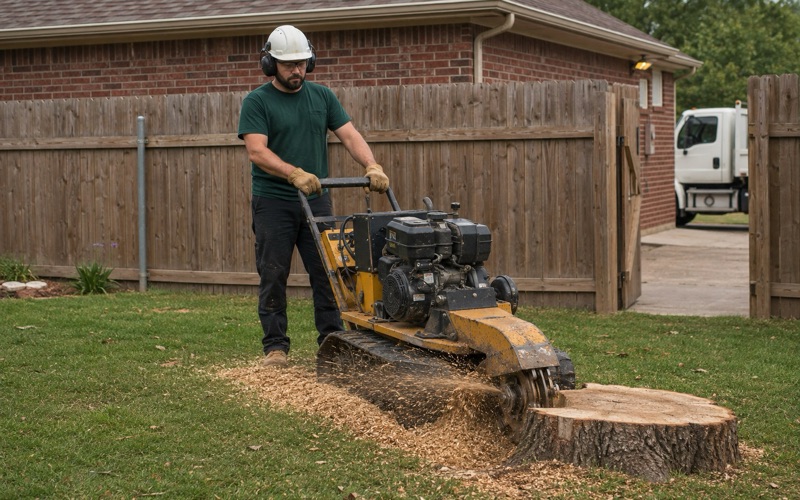
Stump grinding depth here depends on which soil series the lot sits on, and the series do not agree. The Hanceville series, established in Cullman County in 1908, carries a solum of 40 to 72 inches with depth to strongly cemented or indurated bedrock of five to nine feet or more, while the Hartsells series runs 20 to 40 inches to bedrock and Townley has paralithic contact above 40 inches. A grinder rated to cut roughly 12 to 25 inches below grade is held to its own rating on the deep profile and can be stopped by sandstone on a shallow one, so we quote what the machine will do and confirm the finished depth at the stump.
Grinding and root excavation are excavation, so an Alabama 811 notice goes in before the cutting wheel turns.
Six houses in ten predate 1980, and so does the canopy
Cullman holds 8,803 housing units, 59.8 percent of them built before 1980 and 19.6 percent standing before 1960. Trees planted alongside houses that age are full-size now, and with 69.1 percent of the stock one-unit detached, that usually means one owner, one yard and a crown that has had four or five decades to spread over a roof.
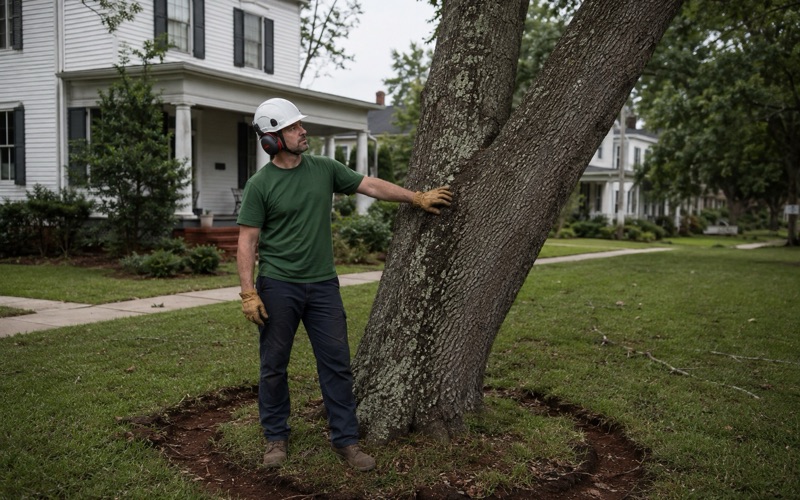
What we look at on a tree that old is structural rather than cosmetic: co-dominant stems with included bark where the union was never corrected, a decay column with too little sound shell left around it, movement at the root plate. Sounding the trunk with a mallet and, where the answer carries real money, resistance drilling is what separates a removal from a crown reduction.
Who calls, and who signs off
The tenure split here is 61.5 percent owner-occupied against 38.5 percent renter-occupied, and 28.2 percent of the housing stock sits in structures of two or more units, much of it in the older blocks. That changes who we talk to rather than what we do. On a rental or a duplex the tenant is usually the person who noticed the limb over the driveway, and the owner is the person who authorizes the work, so we will walk the tree with whoever is on site and send the estimate to whoever signs it.
The wire between the pole and the house
Inside the city limits the electric utility is Cullman Power Board, which publishes only that it proactively trims trees along its rights-of-way throughout the year, with no clearance distance, no cycle length and nothing about the service drop. Outside the city the territory belongs to Cullman Electric Cooperative, whose published rule is 15 feet on each side of the line on a four-year trim cycle, with removal only by the landowner’s permission and, for a danger tree outside that 15-foot zone, cleanup left to the property owner.
Since neither utility publishes an answer on the drop between the pole and the weatherhead, we ask by phone before a crew is scheduled near one instead of assuming what another utility would do. A downed or arcing conductor is a call to the utility first, at 256-734-2343 inside the city limits, and to 911 wherever life safety is in question.
Weighed in by half past three, or the wood waits for morning
Curbside brush service is not a disposal plan for a removal, and the city states the rule in its own words: contractors are responsible for the removal of brush and limbs they service. Even for a homeowner doing their own cutting the service is metered, at three cubic yards per stop, limbs under six feet, and stumps and tree parts under seventy-five pounds, on a five-to-six-week rotation across the city during heavy brush season.
The obvious contractor workaround is closed as well. The City of Cullman Sanitation Department’s own Roll Off Service Agreement states that the customer shall not load equipment with tree stumps or telephone poles, so a rented container is not the stump route here. What is left is hauling to the gate.
The 3:30 cutoff is a scheduling fact, not a footnote
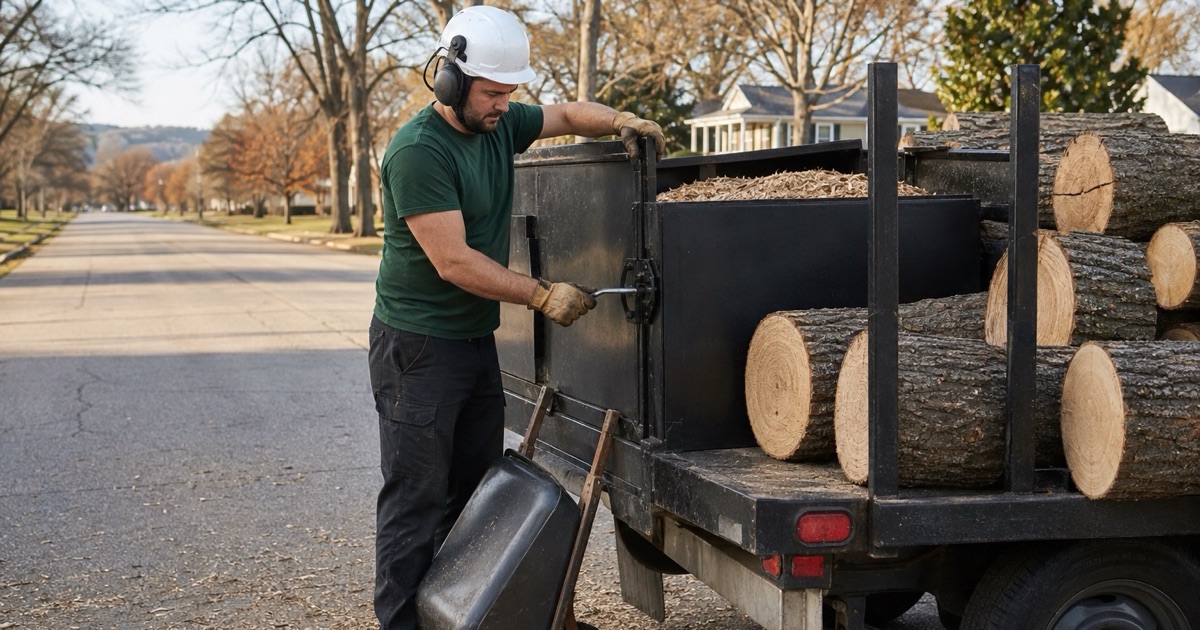
The Cullman Landfill at 2805 Alabama Highway 69 South is open Monday through Friday from 7:00 a.m. to 4:00 p.m. and Saturday from 7:00 a.m. to noon, but a load has to be weighed in by 3:30 p.m. to be unloaded and off the scale by closing. A takedown that finishes at 3:45 p.m. has no gate that day, which leaves either wood sitting in the yard overnight or a truck making the run before the last section comes down.
We schedule the last load backward from half past three, and on a big removal that is why our crew starts earlier here than the tree itself seems to require. It is also why the debris line on an estimate is a real number rather than a rounding: tonnage is quoted at 43 dollars and 25 cents per ton at the landfill in the Sanitation Department’s own roll-off agreement.
Firewood, quoted for what it is
Where a removal yields sound hardwood we will price a firewood credit, and we will tell you plainly that it is a modest one. A credit like that is worth most on a job whose county gate refuses a log at any price. Here the wood has somewhere to go at a published per-ton rate, so the credit trims the debris line rather than transforming it.
- 20+ Years in the Tennessee Valley
- Free Written Estimates
- Same-Day Storm Response